
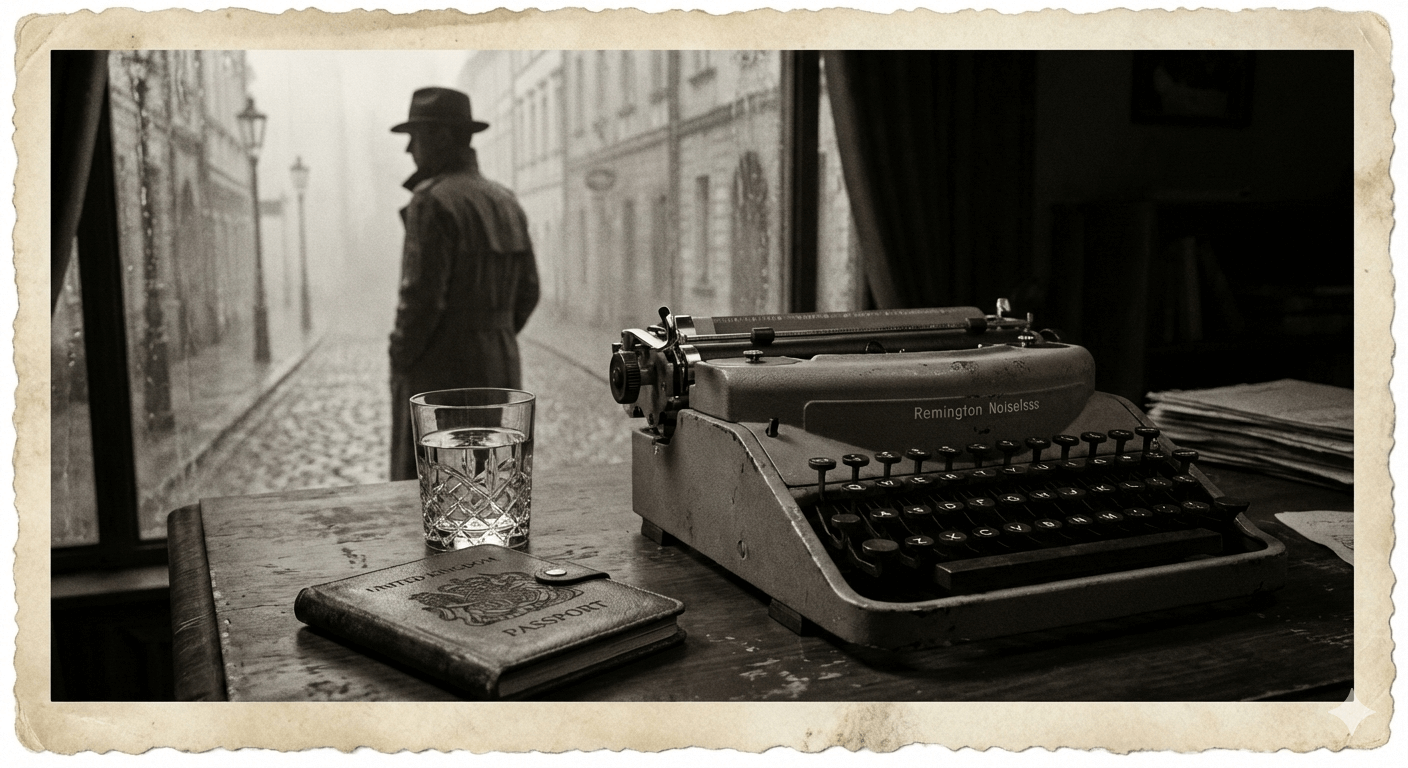
The Poet of Apprehension
While the masters of the Lost Generation focused on the “True Sentence,” Patricia Highsmith focused on the “True Obsession.” She didn’t care about who committed the crime; she cared about the precise moment a normal human being decides that murder is a logical solution to their problems. In the world of Independent Craft, Highsmith stands as the godmother of psychological dread—a writer who understood that the most terrifying place in the city isn’t a dark alley, but the human mind.
For the modern creator, studying Highsmith is an exercise in Psychic Distance and moral ambiguity. She took the Urban Noir aesthetic and stripped it of its traditional heroes, replacing them with drifters, sociopaths, and dreamers who are always one step away from total collapse. If you want to learn how to make your readers root for a character they should logically despise, you need to read Highsmith.
Heads up: Some of the links below are affiliate links. If you buy something through them, I get a small commission at no extra cost to you. It helps keep this site running and the coffee brewing. Thanks for the support!
The Ripley Effect: Sympathy for the Sociopath
Her most famous creation, Tom Ripley, is a masterclass in the Unreliable Narrator. Ripley isn’t a monster; he’s an aspirational figure. He wants the “Good Life,” and the city—with all its class barriers and closed doors—won’t let him in.
- The Internal Justification: Highsmith never portrays Ripley as “evil.” She portrays him as practical.
- The Reader’s Trap: By keeping the prose tightly focused on Ripley’s anxiety about getting caught, she forces the reader to share that anxiety. You aren’t hoping he gets arrested; you’re hoping he remembers to wipe the fingerprints off the glass.
- The Lesson: When writing your own Independent Projects, focus on the character’s fear rather than their morality. Fear is a universal language; morality is subjective.
Highsmith’s Toolkit: Suspense through Subtext
Highsmith was a practitioner of the Architecture of Silence. She understood that what is not said on a train ride between two strangers is far more dangerous than what is.
The Highsmith Suspense Matrix:
| Technique | How it Works | Narrative Impact |
| The Moral Swap | A “good” character is tempted by a “bad” one. | Creates immediate, visceral tension. |
| The Sensory Anchor | Obsessive focus on a single object (a ring, a lighter). | Heightens the reader’s sense of dread. |
| The Ordinary Setting | Crimes happen in sunny villas or bright cafes. | Makes the violence feel more shocking and real. |
| The “Hopperesque” Pause | Moments of intense loneliness between actions. | Deepens the character’s Internal Need. |

Essential Reading for the Modern Creator
If you want to master the “Architecture of Dread,” start with these three pillars of her bibliography:
- The Talented Mr. Ripley: A study in class envy and identity theft. Watch how she uses the Mediterranean setting not as a paradise, but as a clinical backdrop for a changing identity.
- Strangers on a Train: The ultimate exploration of the “Logic Glitch.” Two men trade murders to solve their problems. It’s a perfect example of how a simple idea can spiral into an inescapable nightmare.
- The Price of Salt (Carol): Though not a thriller, this novel shows her mastery of Psychogeography. The way she describes the department stores and the winter roads of America is pure Urban Melancholy.
[“The Talented Mr. Ripley” – The definitive psychological thriller. A mandatory study for any indie writer. Get it on Amazon.]
Why She Matters in 2026
In an era where AI can generate “standard” plot twists, Highsmith’s focus on the irrational human element is more valuable than ever. She reminds us that the Modern Craft isn’t about being perfect; it’s about being uncomfortably human.
- Rejecting the “Hero’s Journey”: Highsmith’s characters don’t always learn a lesson. Sometimes they just get away with it. This realism is a form of Creator Rebellion that modern readers find refreshing.
- Mastering the Micro-Moment: Use your AI Writing Assistant to help you find the “Highsmithian” details—the nervous tic, the way the light hits a cold cup of coffee, the sudden silence in a crowded room.
[Want to apply Highsmith’s psychological depth to your own work? Revisit: The Architecture of Deception: Writing Unreliable Narrators.]
My Take: The Comfort of the Uncomfortable
I remember reading Highsmith for the first time at 2 AM in a quiet apartment. I found myself checking the locks, not because I was afraid of an intruder, but because she had made me realize how easy it is for a person’s life to unravel.
As a Professional Creator, I’ve learned from her that the most effective way to hook a reader is to make them a co-conspirator. Don’t judge your characters. Don’t apologize for them. Just show the city as they see it: a place of infinite opportunity and absolute dread.
[“Plotting and Writing Suspense Fiction” by Patricia Highsmith – Her own guide to the craft. Rare, insightful, and brilliant. Get it here.]

FAQ: The Highsmith Protocol
1. Is her prose too “old-fashioned” for 2026?
Never. Her “Lean Prose” is timeless. It’s actually more aligned with the Modern Craft than the wordy, over-explained thrillers of the 1990s.
2. How do I write a Ripley-style character without making them “evil”?
Focus on their Want. If the character wants something we all want—security, love, respect—we will follow them even when they use terrible methods to get it.
3. Did she influence the “Neon Noir” aesthetic?
Directly. Her focus on urban isolation and the coldness of modern systems is the DNA of everything from Drive to Cyberpunk 2077.
Final Thought: Trust the Dark
Patricia Highsmith didn’t write for the “market.” She wrote to explore the cracks in the human soul. As an Independent Author, take that courage with you. Don’t be afraid to let the “Urban Ghost” be a little bit dangerous.
Look at the fog. Listen to the silence. Write the dread.
Leave a Reply