
The Queen of Hallucination
We talk a lot about “Grit” and “Urban Pressure.” But Anna Kavan—especially in her 1967 masterpiece Ice—pushed the boundaries of Noir into something far more dangerous: the Slippery Noir. Kavan didn’t just write about criminals and detectives; she wrote about the trauma of existence itself, using the landscape as a weapon of war against the protagonist’s mind.
For the independent writer of 2026, Kavan is the ultimate study in psychological sovereignty. She survived a life of heroin addiction and mental instability by transforming her internal chaos into a cold, crystalline prose that feels like it was written with a diamond on a windowpane. To read Kavan is to learn how to make the reader feel “Atmospheric Dread” without ever raising the pulse of the plot.
Heads up: Some of the links below are affiliate links. If you buy something through them, I get a small commission at no extra cost to you. It helps keep this site running and the coffee brewing. Thanks for the support!
The Environment as the Predator: The ‘Ice’
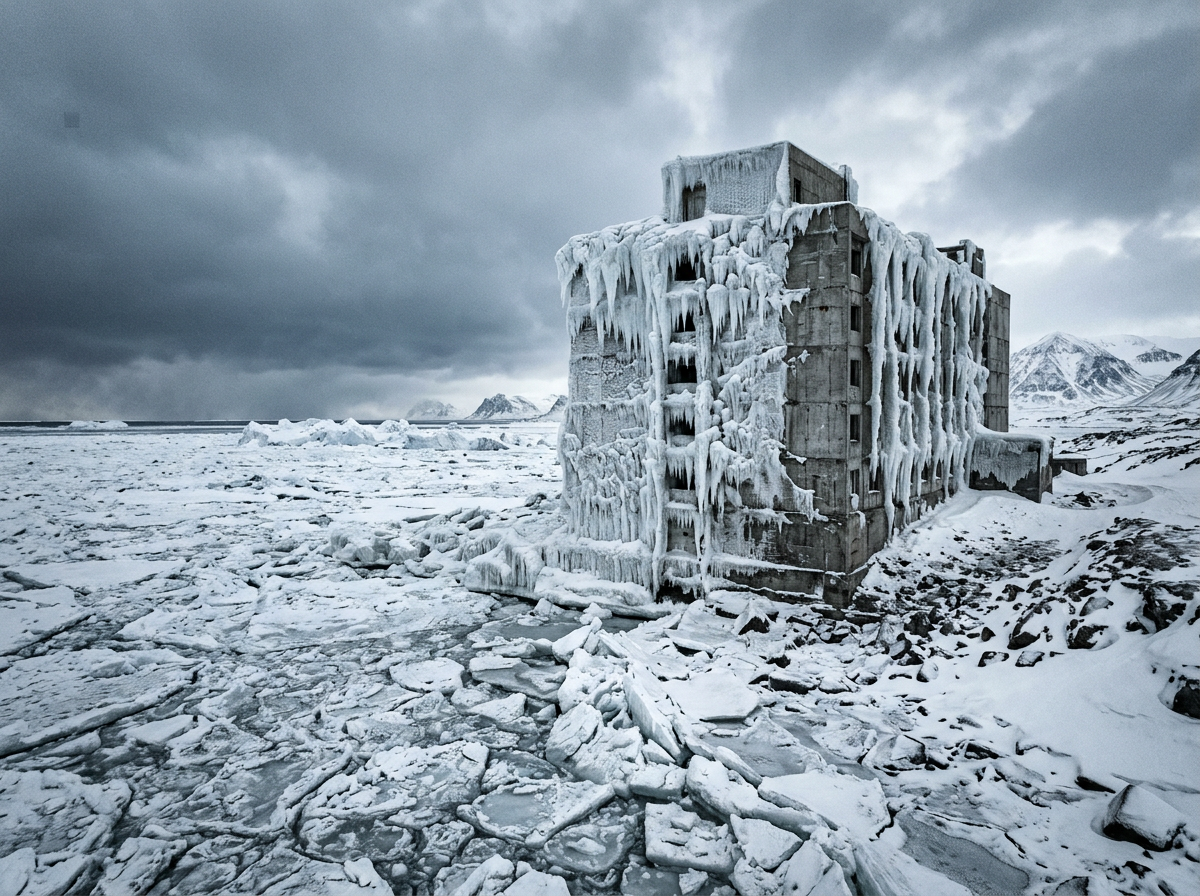
In Kavan’s world, the environment isn’t passive. In Ice, a literal global freeze is advancing, crushing cities and civilizations. But the ice is also a metaphor for the protagonist’s inability to connect, to love, or to escape his own ghost.
Comparing Conventional Noir vs. Kavan’s Existential Noir:
| Feature | Traditional Noir | Kavan’s Existential Noir |
| The City | A place of crime and corruption. | A frozen cage reflecting internal trauma. |
| The Threat | A man with a gun or a corrupt system. | The inevitable collapse of the self. |
| The Pacing | Fast-paced, plot-driven. | Slow, rhythmic, and claustrophobic. |
| The ‘Turn’ | A betrayal or a murder. | A shift in perception where reality ‘glitches’. |
The Lesson: If you want your prose to haunt the reader, stop treating the weather as a “vibe.” Treat it as a character with an agenda. If your city is hot, make the heat feel like a physical interrogation. If it’s raining, make the water feel like it’s trying to drown the character’s secrets.
[Want to see how Kavan’s dread contrasts with the ‘Quiet Suspense’ of the early masters? Revisit: The Poet of the Shadows: A Reading Guide to Cornell Woolrich.]
The Architecture of Anonymity
One of Kavan’s most “Outlaw” moves is the refusal to name her characters or locations clearly. In Ice, we have “the narrator,” “the girl,” and “the warden.” This anonymity creates a Universal Dread. Because the characters lack specific labels, they become vessels for the reader’s own anxieties.
- The Displacement Effect: By stripping away the names, Kavan forces the reader to focus on the Architecture of Character—their needs, their fears, and their patterns of behavior.
- The Dream Logic: This anonymity allows the story to shift between reality and hallucination without warning. It is the ultimate narrative glitch.
Applying the Kavan Aesthetic to the 2026 Toolbox
You can use your AI Editorial Board to inject some of Kavan’s coldness into your work.
- The ‘Clinical’ Prompt: Take a scene and ask Claude 4: “Rewrite this using the ‘Anna Kavan Style’. Focus on the cold, the textures of ice and glass, and remove all emotional warmth. The narrator should be detached, observing their own suffering like a scientist.”
- The Sensory Audit: Use ProWritingAid to look for “Abstract Words.” Kavan succeeds because she replaces abstract feelings (fear, love, hate) with concrete, cold images. Replace “He was afraid” with “The ice in his lungs expanded.”
- The Atmospheric Anchor: Use Lyria 3 to generate a soundscape of “Deep Winter Drones” and “Cracking Glass” while you write your Kavan-inspired chapters.
[Supercharge your prose with ProWritingAid Premium. The best structural and stylistic tool for the Meso-Edit. Start here.]

My Take: The Mercy of the Cold
When I read Ice, I felt like I was being slowly buried. It was an uncomfortable experience, but it was also a revelation. I realized that as a writer, I had been “protecting” my readers too much. I was giving them too many “warm” moments of relief.
Kavan teaches us that true noir of the soul requires a commitment to the shadows. As an independent rebel, you shouldn’t be afraid to leave your reader out in the cold. When you use the environment to reflect a character’s internal need, you create a resonance that is far more powerful than any plot twist. Kavan didn’t write for the masses; she wrote for the people who understood that sometimes, the only way to find the light is to look directly at the ice.
[“Ice” by Anna Kavan – The book that Brian Aldiss called the greatest ‘slipstream’ novel of all time. A mandatory study in atmosphere. Get it on Amazon.]

FAQ: The Kavan Style
1. Is Kavan too ‘literary’ for Urban Noir?
Not at all. Noir is fundamentally about the individual crushed by forces they can’t control. Kavan just replaced the “mob boss” with “the universe.” Her techniques for building atmosphere are universal.
2. How do I avoid being too ‘depressing’?
The “beauty” of Kavan’s prose is what keeps the reader engaged. The world is cold, but the writing is beautiful. Focus on the Jazz of Prose—the rhythm and the imagery—to balance the darkness of the themes.
3. Does this style work in First Person?
Kavan is the master of the “Unreliable First Person.” Because the narrator is often detached or hallucinating, it creates a layer of mystery that keeps the reader questioning every “Logic Glitch” in the narrative.
Final Thought: Rule the Void
The soul is the ultimate wilderness. Don’t be afraid to explore the frozen parts of your own imagination.
When you master the architecture of existential dread, you aren’t just writing a story—you are creating a world that breathes its cold, honest truth directly into the reader’s bones.
[“Machines in the Head” – A collection of Kavan’s short stories that explore the ‘Architecture of Hallucination’. Check it out here.]
Leave a Reply