
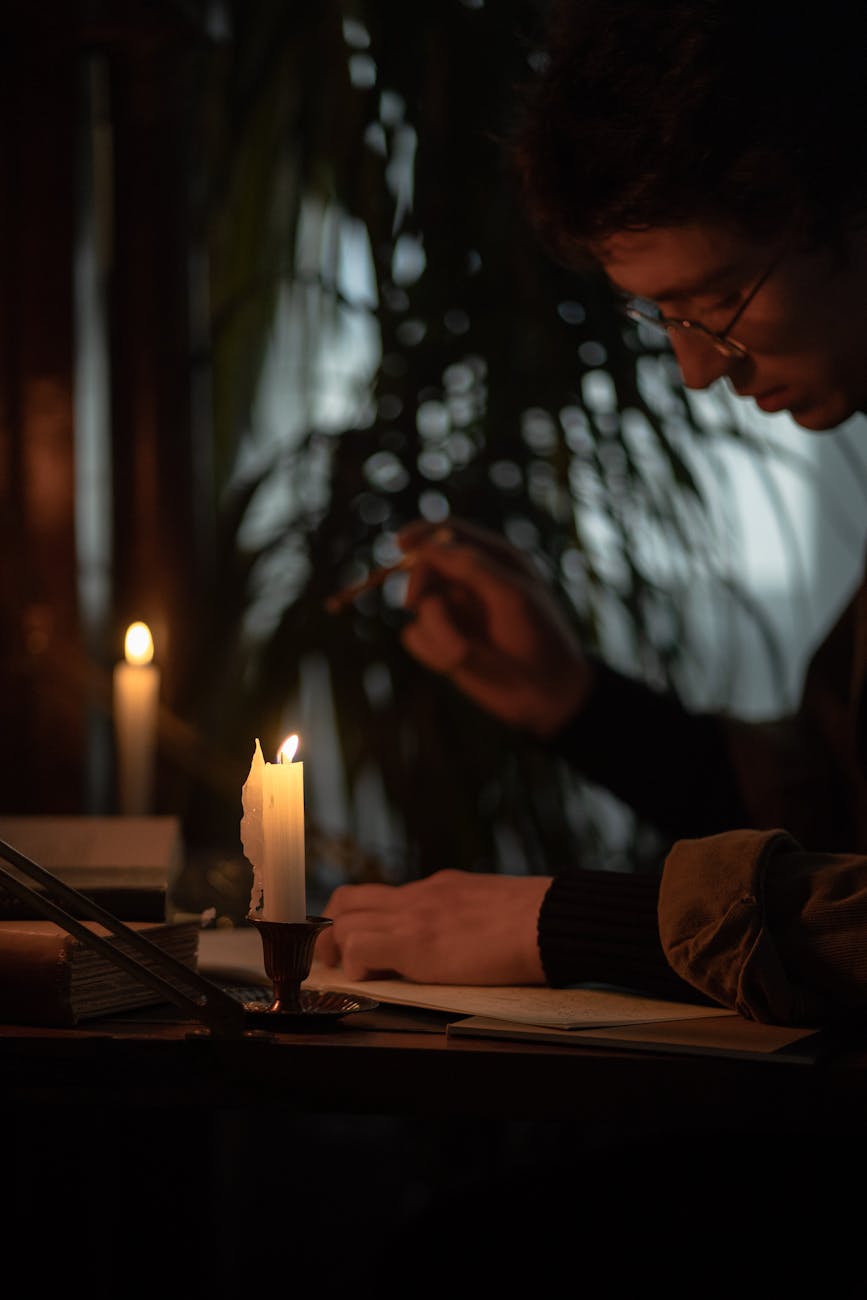
The War for Attention
In 2026, the greatest enemy of the Independent Creator isn’t writer’s block—it’s the fragmented attention of the digital age. Our brains are constantly pinged by notifications, noise, and the “Logic Glitches” of daily life. To write high-end Urban Noir, you need to descend into a specific mental state where the city feels more real than the room you’re sitting in.
The Atmospheric Anchor is an AI-generated, generative soundscape designed to act as a “Neural Shield.” Unlike a standard playlist that can distract you with familiar lyrics or jarring transitions, these anchors are fluid, evolving, and perfectly tuned to the specific “Vibe” of your current chapter. This isn’t just background noise; it’s a structural tool for the Modern Craft.
Heads up: Some of the links below are affiliate links. If you buy something through them, I get a small commission at no extra cost to you. It helps keep this site running and the coffee brewing. Thanks for the support!
The Audio Toolbox: Choosing Your Frequency
By 2026, we have moved beyond static “Rain Sounds” on YouTube. We now use generative models that respond to our needs in real-time.
| Tool | Best For | The Noir Advantage |
| Lyria 3 (Music Gen) | 30-second “Mood Prompts.” | Perfect for capturing the specific Jazz of Prose in a scene. |
| Endel (Generative) | Deep Focus & Flow. | Uses biometrics to adjust the soundscape to your heart rate. |
| MyNoise (AI-Enhanced) | Environmental Precision. | Allows you to mix specific urban elements: distant sirens, rain on metal, hum of servers. |
| Brain.fm | Neural Phase Locking. | Scientifically designed to induce the “Alpha State” for rapid drafting. |
The Protocol: Building Your “Urban Soundscape”
To use an Atmospheric Anchor effectively, you must follow the three stages of the protocol. You are the architect; the AI is the engineer.
Stage A: The Prompting of the Mood
Don’t just look for “Lo-fi beats.” Use the same sensory detail you use in your writing. If you are using a tool like Lyria or a custom GPT-driven ambient generator, give it the Ghost of the scene.
- Example Prompt: “Generate a 2-hour generative ambient track. Dark Jazz influence. Low-frequency hum of a city power grid. Occasional distant thunder. Heavy on the reverb. No vocals. No high-tempo drums.”
Stage B: The Anchor Ritual
Consistency is the key to neural training. Wear the same headphones. Sit at your Minimalist Desk. Start the soundscape five minutes before you type a single word. This tells your brain: “We are leaving the 2026 reality. We are entering the City.”
Stage C: The Phase Shift
Different phases of the Modern Craft require different frequencies.
- Drafting (The Jazz): Rhythmic, steady beats that keep the momentum.
- Editing (The Clinical): Minimalist, cold drones that allow for sharp, logical focus.
- Brainstorming (The Chaos): Experimental, abstract textures that encourage “Logic Glitches” and new ideas.
[Want to know what to write once you’re in the zone? Revisit: The Architecture of Dialogue: Writing Sharp, Staccato, and Subtext-Heavy Conversations.]

3. Engineering the “Ghost” Through Sound
Today, we can take this even further. Some Autonomous Authors are now training their own small audio models on specific “Sound Bibles” for their series.
If your novel takes place in a crumbling, underwater district, your anchor should include the metallic groans of the hull and the muffled echoes of the deep. This creates a Psychogeography of the ear. When you hear that specific combination of sounds, your subconscious immediately accesses the vocabulary of that world. You stop “searching” for words; you start “reporting” what you hear.
The writer of the future is an immersive technician. We don’t just tell the reader about the world; we inhabit it ourselves during the act of creation.
4. The Hardware of the Flâneur
To get the most out of the Atmospheric Anchor, your physical gear matters.
- Open-Back Headphones: These allow for a wider “Soundstage,” making the AI city feel like it’s actually surrounding you, rather than just inside your head.
- Haptic Feedback Chairs: For the truly dedicated, these can translate the low-frequency drones into physical vibrations, grounding you in the Urban Grit.
[Master your focus with Audio-Technica ATH-R50X– One of the most advanced open-back headphones. Get it on Amazon.]
My Take: The 4 AM Immersion
I used to struggle with the transition from my “real life” to the dark streets of my novels. I’d waste 30 minutes just trying to get into the mood. Now, with my custom Endel noir-profile and a Lyria-generated jazz-drone, the transition takes exactly 60 seconds.
The moment the “Ozone and Rain” track starts, my pulse slows down. I can feel the weight of the character’s Ghost. I can see the flickering neon. I’m not “writing” anymore; I’m just a Digital Flâneur with a keyboard. If you haven’t engineered your audio environment yet, you’re leaving 40% of your productivity on the table.
[“Deep Work” by Cal Newport – The updated 2026 edition for the AI era. Learn why environment is everything. Get it on Amazon.]

FAQ: The Anchor Protocol
1. Does it have to be “Noir” music?
Not necessarily. The anchor should match the emotional frequency of the scene. If you’re writing a violent confrontation, you might need “Industrial Drones.” If it’s a quiet moment of melancholy, “Ambient Noir Jazz” is your friend.
2. Is it better than silence?
For most people, yes. Pure silence is rare and often highlights small, distracting noises (a ticking clock, a distant car). An anchor provides a consistent “masking” layer that protects your focus.
3. Can I use these soundscapes for my readers?
Absolutely! Many Independent Professionals now release their custom AI soundscapes as “Atmospheric Reading Tracks” on their Shopify Store. It’s a high-value Artifact that deepens the reader’s immersion.
Final Thought: Tune Into the Grit
Our enviroment is never quiet, but it can be focused. Stop fighting the noise and start engineering your own silence.
When you master the Atmospheric Anchor, the boundary between your desk and your story disappears. The city is calling—it’s time to answer.
Leave a Reply