
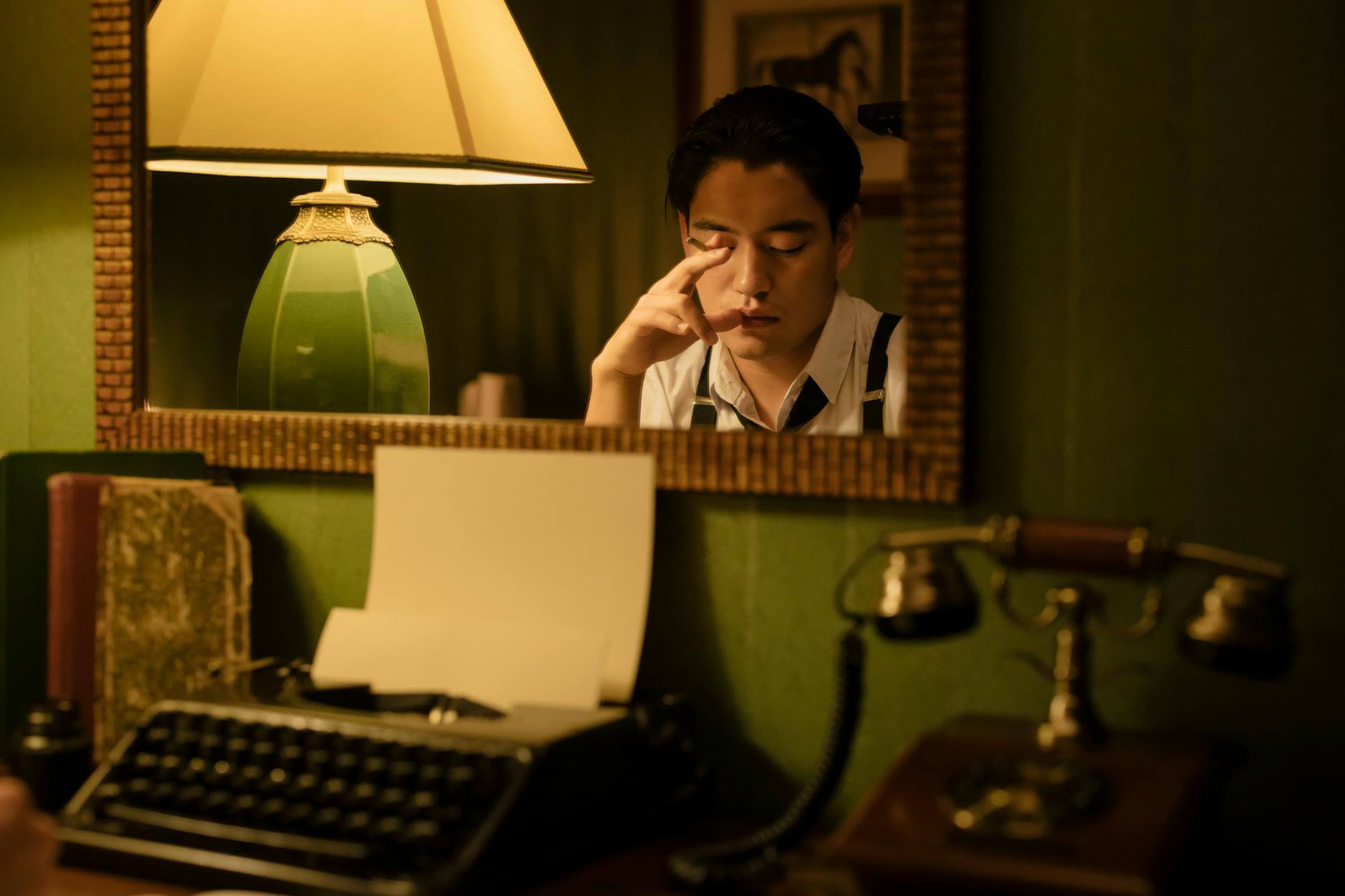
If Hemingway was the “tough guy” of literature, Charles Bukowski was the “guy at the end of the bar” who had seen it all.
Known as the father of Dirty Realism, Bukowski didn’t start finding real success until he was in his 50s. He spent decades working at the post office, writing in the middle of the night, fueled by cheap wine and a refusal to play the “literary game.”
For the indie author, Bukowski is a reminder that your “day job” isn’t a prison—it’s material. He didn’t write about what should be; he wrote about what is. Here is how to navigate his raw, unfiltered world.
Heads up: Some of the links below are affiliate links. If you buy something through them, I get a small commission at no extra cost to you. It helps keep this site running and the coffee brewing. Thanks for the support!
The Philosophy of “Don’t Try”
These are the words on Bukowski’s gravestone. It sounds lazy, but for a writer, it’s profound. It means: Don’t force the art. If it doesn’t come bursting out of you, wait. Don’t try to sound like a “writer.” Just tell the truth.
Most people think poetry has to be flowery and complex. Bukowski’s poetry is like a punch to the jaw. It’s conversational, funny, and heartbreakingly simple.
“Love is a Dog from Hell” is the perfect introduction. It’s about the struggle of relationships, the loneliness of the city, and the small joys of survival. It reads more like a diary than a classic poetry book.
[Grab “Love is a Dog from Hell” on Amazon]
The “Day Job” Nightmare
If you’ve ever felt like your 9-to-5 is killing your soul, this book will speak to you.
“Post Office” was his first novel, written in a few weeks after he finally quit his job at the U.S. Postal Service. It introduces his alter-ego, Henry Chinaski. It’s hilarious, cynical, and deeply relatable for anyone who has ever felt like a cog in a machine.
[Find the classic edition of “Post Office” here or try the audiobook]

…and the Origin Story
To truly understand why he wrote the way he did, you have to go back to the beginning.
“Ham on Rye”, widely considered his best work, is a “coming-of-age” story unlike any other. It’s about a young boy growing up during the Great Depression, dealing with poverty and a sense of not fitting in. It’s brutal, but it’s where his “indie” spirit was born.
[Get your copy of “Ham on Rye” (Amazon)]
Bukowski’s legacy isn’t about the lifestyle; it’s about the honesty. He showed us that you can write about the “ugly” parts of life and still find beauty in them. In a world of filtered social media and AI-polished prose, his raw voice is a breath of fresh, smoky air.

Leave a Reply