
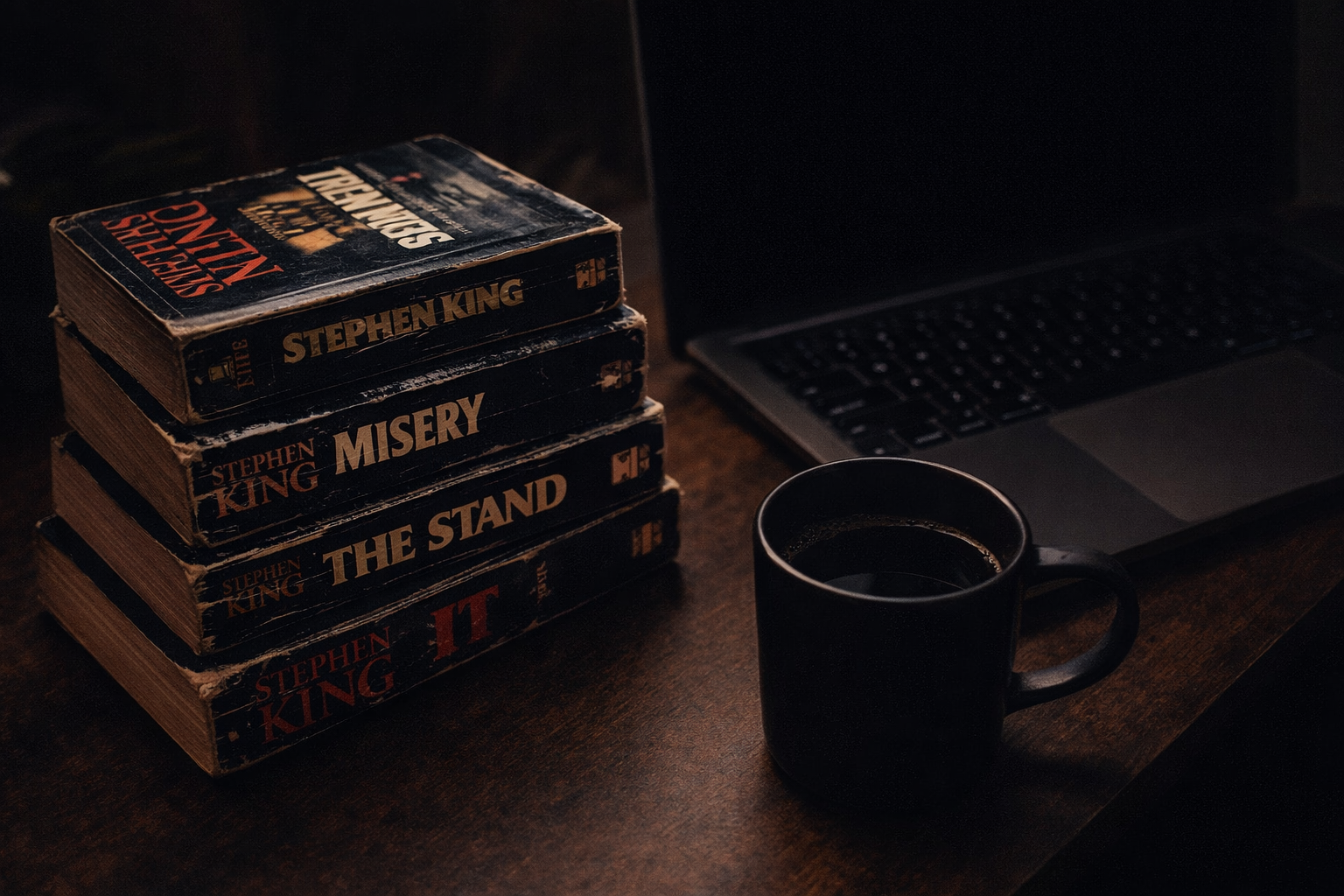
When we think of Stephen King, we usually think of clowns in sewers or haunted hotels. But for those of us trying to build a writing life from scratch, King is more than the “King of Horror.” He is the ultimate example of the blue-collar writer.
He doesn’t wait for “the muse.” He shows up, sits at the desk, and puts in the work. Whether you love his stories or not, his career is a blueprint for every independent creator navigating the digital age.
King’s style is conversational, raw, and unapologetically human. He writes like a friend telling you a story by a campfire. For an indie writer, the lesson is simple: You don’t need a fancy vocabulary to move people; you just need to be honest.
Heads up: Some of the links below are affiliate links. If you buy something through them, I get a small commission at no extra cost to you. It helps keep this site running and the coffee brewing. Thanks for the support!

The only book you truly need
If you are a writer and haven’t read this yet, stop everything.
“On Writing: A Memoir of the Craft” isn’t just a book; it’s a masterclass. Half-autobiography, half-manual, King breaks down the “toolbox” every writer should carry. It’s the most encouraging, no-nonsense guide to writing ever published.
{Check out“On Writing“ on Amazon or try the audiobook by Audible}
One of King’s most famous “secrets” is his daily goal: 2,000 words a day. Every. Single. Day.
As an independent creator, it’s easy to get lost in the “marketing” or the “tools.” But King reminds us that the only way to finish a book is to “write with the door closed.” This means shutting out the world, the AI, and the critics until the first draft is done.
The Lesson? Build a routine that is non-negotiable.
The Toolkit
King famously wrote his early novels on a simple desk in a laundry room. Today, he advocates for a quiet space and a door you are willing to shut.
To emulate his focus, you don’t need a spaceship. You need a distraction-free environment. Many modern writers are turning back to mechanical keyboards to get that tactile, “typewriter” feel that King grew up with—it connects you to the words in a way a touch-screen never can.
{My favorite mechanical keyboard for long writing sessions on Amazon}
Telepathy is Real
King says that writing is telepathy. You think of an object, you describe it, and I see it in my head. That’s the magic. Don’t overcomplicate it with fancy AI prompts or complex plots. Just tell the truth, sit in the chair, and keep typing.

Leave a Reply