
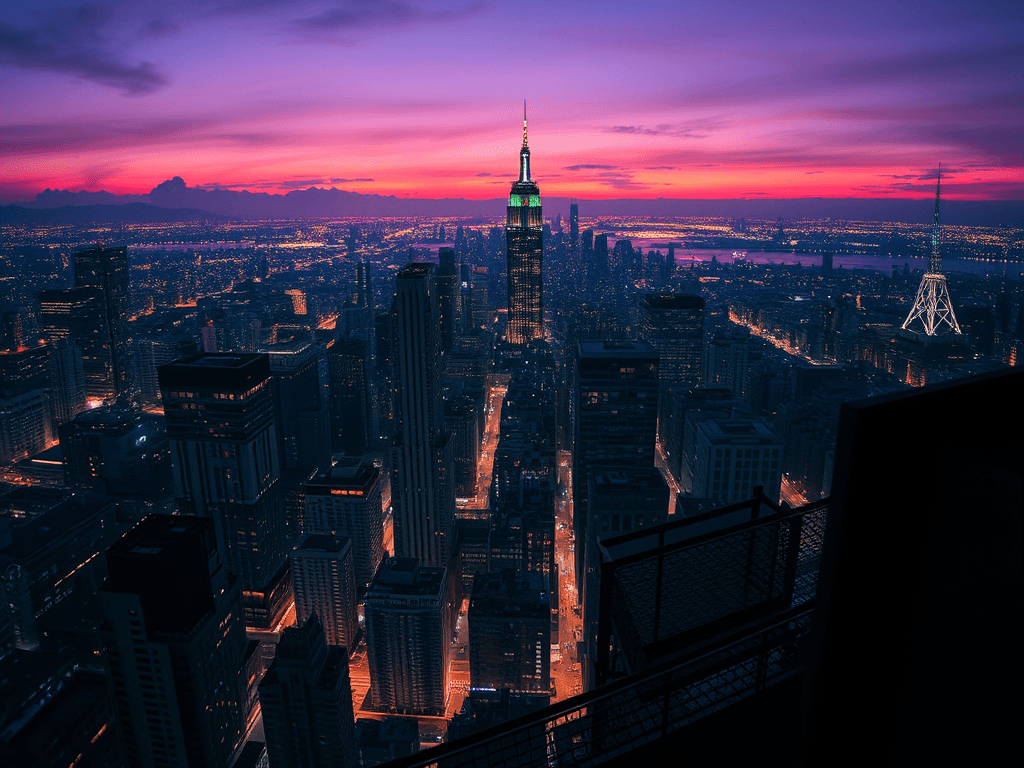
In the Modern Craft of the mid-2020s, we have spent countless hours dissecting the psychology of the protagonist, the intricate layers of the Ghost, and the surgical precision of the Meso-Edit. We have built characters who lie with professional ease—to themselves, to their allies, and most importantly, to the reader. But as any Independent Professional who has spent a night walking through the rain-slicked districts of their own imagination knows, there is one entity in the story that remains incapable of deception. The city. The architecture of the urban landscape is the only character in Urban Noir that never lies, because the city has no ego to protect and no future to fear. It simply is, and in its “being,” it reveals the absolute truth of the human condition.
Heads up: Some of the links below are affiliate links. If you buy something through them, I get a small commission at no extra cost to you. It helps keep this site running and the coffee brewing. Thanks for the support!
When we talk about the city as a character, we aren’t just discussing a setting or a backdrop for the action. We are talking about a sentient, indifferent witness. A character who lied about their whereabouts on the night of the murder can be caught in a contradiction, but the alleyway where the crime took place remains exactly as it was: cold, damp, and smelling of ozone and neglect. The alleyway tells the truth about the violence that occurred there through the way the light hits the bloodstain and the way the shadows refuse to retreat. As an Independent Rebel, your duty is to realize that while your characters provide the “Jazz” of the narrative, the city provides the “Structural Integrity.” Without the honesty of the concrete, the lies of the inhabitants would have no weight.
This honesty is rooted in what we call Psychogeography—the study of how the physical environment shapes human behavior and emotion. In a noir world, the architecture isn’t just a collection of buildings; it is a manifestation of the character’s internal decay or their desperate hope. A skyscraper isn’t just glass and steel; it is a monument to the corporate greed that is crushing the life out of the districts below. A basement apartment isn’t just a room; it is a cage that defines the limits of a character’s survival. The city speaks through these structures, providing a commentary on the plot that the narrator is often too compromised to provide. When the rain falls, it doesn’t fall for dramatic effect; it falls because the city is washing away the evidence of a thousand small betrayals, and the resulting smell of wet asphalt is a “True Sentence” that no amount of AI-generated prose can fake.
The Concrete Confession
The city’s honesty comes from its history—the layers of grit and glory that have been baked into its foundations over decades. In the Independent Era, we use our Obsidian Second Brain to map this history because we know that a city without a past is just a movie set. Every cracked sidewalk and every faded neon sign is a confession. They tell the reader that people were once here, that they had dreams, and that those dreams were eventually ground down by the same gears that are now threatening the protagonist. This is the Urban Ghost in its most physical form. While a character might claim to be “new” or “different,” the city remembers the people who looked exactly like them fifty years ago. The architecture is a record of the cycle of human failure, and it presents this record with a cold, clinical indifference that is the very essence of Noir.
As creators, we often fall into the trap of trying to make our settings “cool” or “aesthetic.” We prompt our AI models for “cyberpunk neon” or “gritty streets,” but the true architect of Noir knows that beauty is a secondary concern. The primary concern is inevitability. The city is built in a way that dictates the movement of the characters. A narrow street forces a confrontation; a wide, empty plaza creates a sense of vulnerability; a dead-end street is a physical manifestation of a plot point. When the city dictates the action, the action feels real. If a character is trapped, it shouldn’t be because the author needed them to be trapped; it should be because the geography of the district made escape impossible. This is where the city proves its honesty—it never provides an exit that hasn’t been earned.
“The city is a machine for living, but in Noir, it is a machine for revealing. It strips the characters of their masks until only the bone of their intent is left.”
This revelation often happens through the Urban Soundscape. The city has a voice that is composed of a million small truths: the rhythmic thud of a subway train, the distant wail of a siren that signals another person’s tragedy, the hum of a faulty power grid that sounds like a collective anxiety. These sounds are honest because they are persistent. They don’t change because a character is happy or sad. They represent the “Background Radiation” of the urban experience. When you write these sounds into your prose, you are grounding your story in a reality that the reader can feel in their teeth. You are telling them that even if the narrator is lying, the world around them is vibrating with the truth of its own existence.
The Sovereign Architecture
For the Autonomous Author, mastering the architecture of the city is an act of sovereignty. It is how you distinguish your Independent Brand from the generic, mass-produced fiction that lacks a sense of place. Anyone can write a detective story, but only a master can write a story where the city feels like it has a pulse and a memory. This requires a level of research that borders on the obsessive—the Shadow Reader approach. It means looking at maps of old sewer systems, understanding the history of a district’s zoning laws, and knowing which buildings were built during the height of the city’s prosperity and which were thrown up during its collapse. This data isn’t just “flavor text”; it is the foundation of your world’s integrity.
When you build a world this deeply, you are creating an Intellectual Property (IP) that has value beyond the words on the page. As we discussed in our IP Architecture guide, a city that is logically sound and historically rich can be expanded into games, audio dramas, and artifacts because it feels like a real place. The honesty of the city makes it “portable.” Readers will want to return to your districts not just for the plot, but for the feeling of being in that specific space. They want to experience the “Grit” that you have so carefully engineered. In a world of digital ghosts, the physical reality of a well-built city is the ultimate Artifact.
[“The Image of the City” by Kevin Lynch – The fundamental text on how we perceive urban space. An essential tool for the IP Architect. Get it on Amazon.]

The city’s honesty also serves as a check on your own creative impulses. When you are tempted to save a character with a lucky break, the city asks: “Is there a door there? Is there a reason for someone to be in that alley at 4 AM?” If the answer is no, the city forbids the move. This “Geography of Logic” is what makes the Architecture of the Turn so satisfying for the reader. They realize that the plot wasn’t manipulated; it was simply the result of the character navigating a physical reality that didn’t care about their survival. This is the ultimate lesson of Jean-Patrick Manchette and the other masters of the “Clinical Eye.” By observing the city with the same detachment that the city observes us, we find a truth that is far more powerful than any manufactured emotion.
The Manifesto of the Street
So, let us commit to the city. Let us stop treating our settings like cardboard cutouts and start treating them like the ultimate truth-tellers of our era. As Independent Professionals, we must become the architects of our own shadows. We must map the streets with the precision of a cartographer and the soul of a poet. We must realize that every building we describe is a character that has witnessed more than our protagonists ever will.
- Rule 1: The city was here before the character, and it will be here after they are gone. Respect the timeline of the concrete.
- Rule 2: Geography is destiny. If the character needs to get to the other side of town, the traffic, the broken bridges, and the dangerous districts are the true antagonists.
- Rule 3: The city doesn’t have “vibes”; it has “mechanics.” Understand how the trash is collected, where the power comes from, and who owns the air rights. The truth is in the infrastructure.
- Rule 4: Never describe a room without describing its relationship to the street. The street is the source of all conflict.
When you follow these rules, your Urban Noir becomes more than just a genre exercise. It becomes a report from a reality that feels dangerously familiar. You are building a world that doesn’t just entertain; it haunts. You are creating a space where the reader can lose themselves, only to find that the truth they were looking for was written on a brick wall in a district they’ve never visited.
[“Delirious New York” by Rem Koolhaas – A manifesto for the city as a generator of modern life and noir possibilities. Check it out here.]
My Take: The City in the Machine
I have spent years building cities that don’t exist, and yet, they are more real to me than the streets I walk on in my daily life. I have realized that the more I trust the city to tell the truth, the less I have to work to make the characters interesting. If the city is honest, the characters have no choice but to respond to that honesty. They are forced to show their true faces because the city doesn’t provide any masks.
In my latest project, I spent three weeks just mapping the subway system of a fictional city before I wrote the first chapter. People told me I was wasting time. They said the reader wouldn’t care. But when the book launch happened, the most frequent feedback I got was about the “oppressive reality” of the commute. The readers felt the weight of the city. They felt the honesty of the steel. They knew that in that world, the city was the one in control. That is the power of the Architecture of Noir. It is the ultimate tool for the creator who wants to build something that lasts. The words might fade, but the city—if you build it right—will stand forever in the mind of the reader.
[Want to see how to translate this ‘Urban Honesty’ into sensory prose? Revisit: The Jazz of Prose]

FAQ: The Architecture Protocol
1. Does every scene need to focus on the architecture? No. The city is the “Silent Partner.” It should be felt in the background of every scene, but it only takes the spotlight when its physical reality forces the character to act. Think of it as the “Grit” in the gears.
2. How do I make a fictional city feel ‘Honest’? Through consistency and detail. If you establish that a district is poor, the buildings should look, smell, and sound poor. The elevators shouldn’t work. the lights should flicker. The “Honesty” comes from the logical alignment of the setting with the socioeconomic reality of your world.
3. Can I use real cities? Absolutely. But even when using a real city, you must build its “Noir Version.” You must find the shadows that the tourist maps ignore. You must look at the real architecture and ask: “What truth is this building trying to hide?”
Final Thought: Listen to the Concrete
The characters will lie to you. They will promise they’ve changed, they will swear they’re innocent, and they will tell you they have a plan. Don’t believe them. Look at the street. Look at the way the shadows fall between the tenements. Look at the rusted fire escapes and the grime on the windows.
The city is the only one telling the truth.
Trust the grit. When you build a story where the city is the only character that never lies, you are creating a masterpiece of the Modern Craft—a story that doesn’t just sit on a screen, but one that stands tall and heavy in the soul of everyone who dares to enter your streets.
Leave a Reply